Why do you see the speck that is in your brother’s eye, but do not notice the log that is in your own eye? Or how can you say to your brother, “Let me take the speck out of your eye,” when there is the log in your own eye? You hypocrite, first take the log out of your own eye, and then you will see clearly to take the speck out of your brother’s eye.
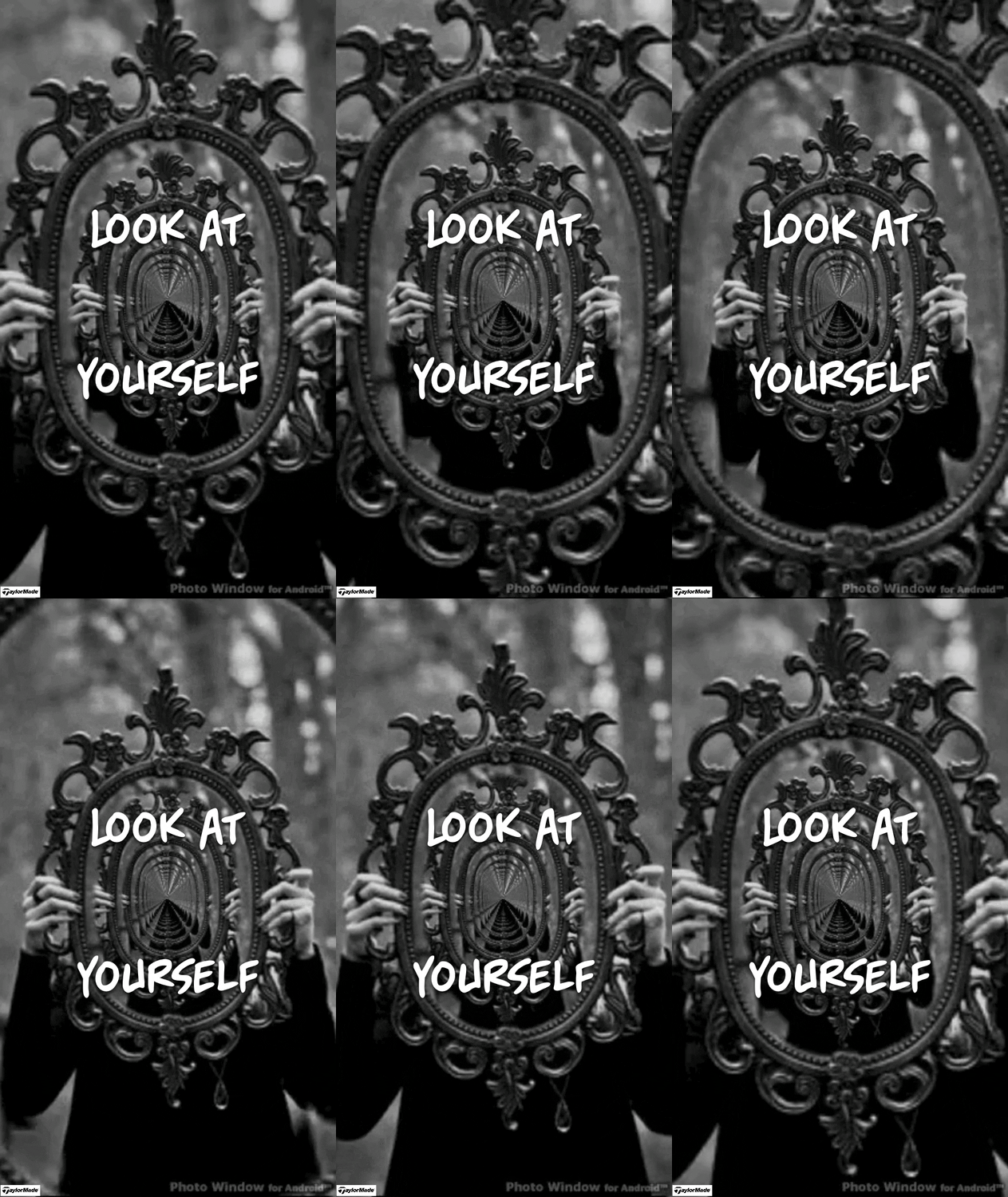
3 Why do you look at the speck that is in your brother’s eye, but do not notice the log that is in your own eye? 4 Or how can you say to your brother, ‘Let me take the speck out of your eye,’ and behold, the log is in your own eye? 5 You hypocrite, first take the log out of your own eye, and then you will see clearly to take the speck out of your brother’s eye. It seems more the rule than the exception that at some point someone will bring up an issue they are having with another person. Typically, they then proceeds to highlight all the ways that person has been wronging them. They may admit they plays a role in the issue, but all the details they shares points to the other person as the main troublemaker. However, the words of Jesus in Matthew 7 tell us that this is not just any problem; this is a sinful human nature problem, and we all have been guilty of this hypocritical response. We all (myself included) are quick to see someone else’s blame, and are slow to recognize our own. Christ first uses hyperbole to help us see the ridiculousness of this sinful human tendency. He paints the picture with images not easily forgotten. Your friend has a small speck of dust bothering his eye. The dust is irritating, maybe cause of blinking or a few cleansing tears, but miniscule. You, on the other hand, have a gigantic problem with your vision, because you have a whole log in your eye obstructing your sight. The pain should be so overwhelming that you can focus on nothing else besides removing the log from your eye. The sheer size of the log (I don’t think we’re talking a sapling size trunk here) upsets your very balance and makes it impossible to really move, let alone function. And yet, you do not even notice your poor balance, throbbing pain and faulty vision, because you are so eager to point out the dust to your friend and give him advice on how to take it out of his eye. When we think about this log and speck scenario, it is simply ridiculous for you with your log to worry about anyone’s speck. It is equally preposterous that your friend will believe you have any credibility in the matter because you are not applying your own advice to your very own giant log. While we can easily agree that the scenario above is laughable, we are slow to take our sin as seriously as a log stuck in our eye. We excuse, justify and minimize our own sin, blaming it on people or circumstances while simultaneously making our brother’s speck out to be as big as the trunk of a redwood. Focus on seeing and then removing your log. Ask yourself how you might have contributed to the last conflict you faced. Consider what unrighteous patterns of thinking, speech or behavior you bring to the relationships you find difficult. Before you confront another, carefully evaluate your own response. Don’t continue living with the log in your eye. Instead, take the energy you use to point out others’ specks and direct that energy at confessing and turning from your own sin. You can’t help someone else, until you help yourself. The point being made in this verse is that we are generally more tolerant to our own sins than we are to the sins of everyone else. It’s not wrong to want to help someone with their sins; with the speck in their eye. It is a good thing to help others with their sins. However, before you can help others, you need to handle your own sins; the log in your own eye. Sometimes we have a tendency to pass judgment on others to keep from truly examining ourselves. It’s absurd for us to spend so much time finding all the little things that are wrong with others while we have our own problems; our own weaknesses; our own sins. We must first overcome our own sins; then we can humbly try to help others with theirs.
 Spiritual Steve